The problem with graduation day
Grad photos are harder to get right than they look, for reasons that have nothing to do with photography. The ceremony runs on someone else's schedule. The venue is crowded. The light is whatever the hall gives you. And the moment you actually want, the one where it has just sunk in, lasts about four seconds.
Almost everyone plans to take photos on the day and ends up with a phone album shot over shoulders. The families who get pictures worth framing usually did one of two things: they booked a photographer for the ceremony, or they scheduled a separate cap and gown portrait session and treated the ceremony as documentary.
The case for a separate portrait session
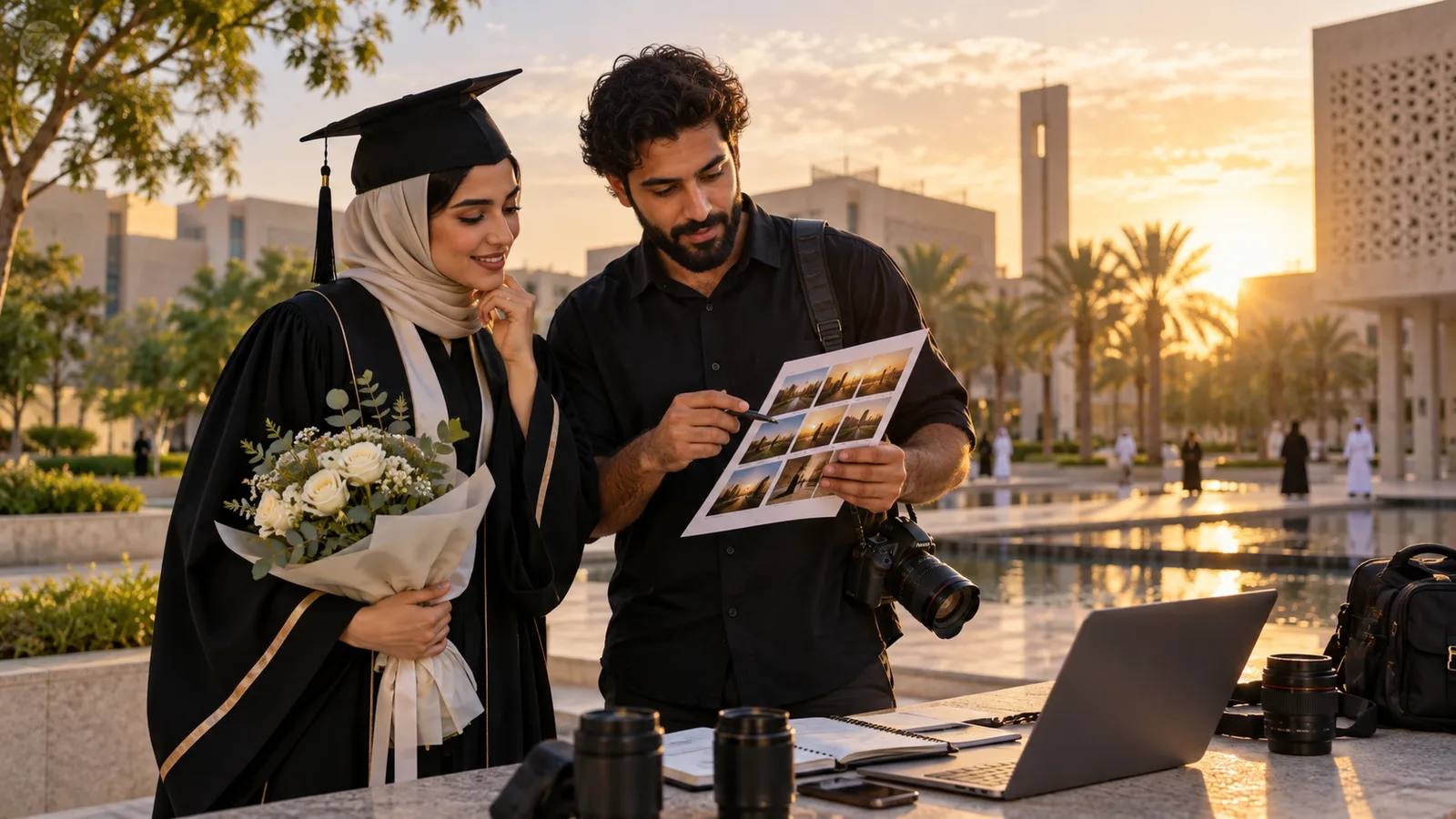
If you only do one thing, do this. A dedicated cap and gown session, away from the crowd, gives you control over everything the ceremony denies you: the background, the light, the time to try more than one pose, and the graduate's full attention.
It also removes the pressure from the day itself. You can put the phone away during the ceremony and actually watch it, knowing the good pictures already exist or are scheduled for later that week.
These sessions are usually short, often under an hour, and they do not need a dramatic location. A clean wall, some greenery, and open shade will outperform an impressive building in harsh midday sun.
If you are photographing the ceremony
Book early. Grad season compresses into a few weeks, and the photographers who are good at crowded indoor events are booked first. Once you have someone, give them the practical detail they cannot guess:
- The schedule, including when your graduate specifically walks. Photographers covering a long ceremony need to know which minute matters.
- Whether flash is permitted. Many venues restrict it, which changes the equipment and the pricing conversation.
- Where they are allowed to stand. Some venues confine photographers to a fixed position, which limits what is possible and is better known in advance.
- Who else must be in the family pictures, and any group that needs to be captured before people scatter.
That last point causes more regret than any technical issue. Families disperse within minutes of the ceremony ending. If there is a group shot you want, decide beforehand where it happens and who gathers everyone.
What to wear under the gown
Gowns photograph as large blocks of flat colour, so the visible details carry the whole outfit. Collars, necklines and shoes are what show. Avoid busy patterns near the face, which fight with the gown, and check the gown length against the shoes you will actually wear rather than the ones you tried on.
Bring a mirror or a friend with an eye for it. Caps sit crooked in almost every unposed grad photo ever taken.
Timing and light for your cap and gown session
If you have any say in when a portrait session happens, choose the hour after sunrise or the hour before sunset. The light is softer, the sky is more interesting, and squinting is not a problem. Midday sun in this region is unforgiving: it puts hard shadows under the eyes and makes a black gown read as a shapeless void.
If the timing is fixed and unhelpful, open shade is your friend. The shaded side of a building gives you even light without the shadows.
Booking a graduation photographer
Graduation is the second most widely offered specialty on the platform, so availability is reasonable outside peak weeks. You can compare photographers who list it at graduation photography. Look for portfolios that include both ceremony coverage and cap and gown portraits if you want both, since they are genuinely different skills and not everyone does both well.